Background
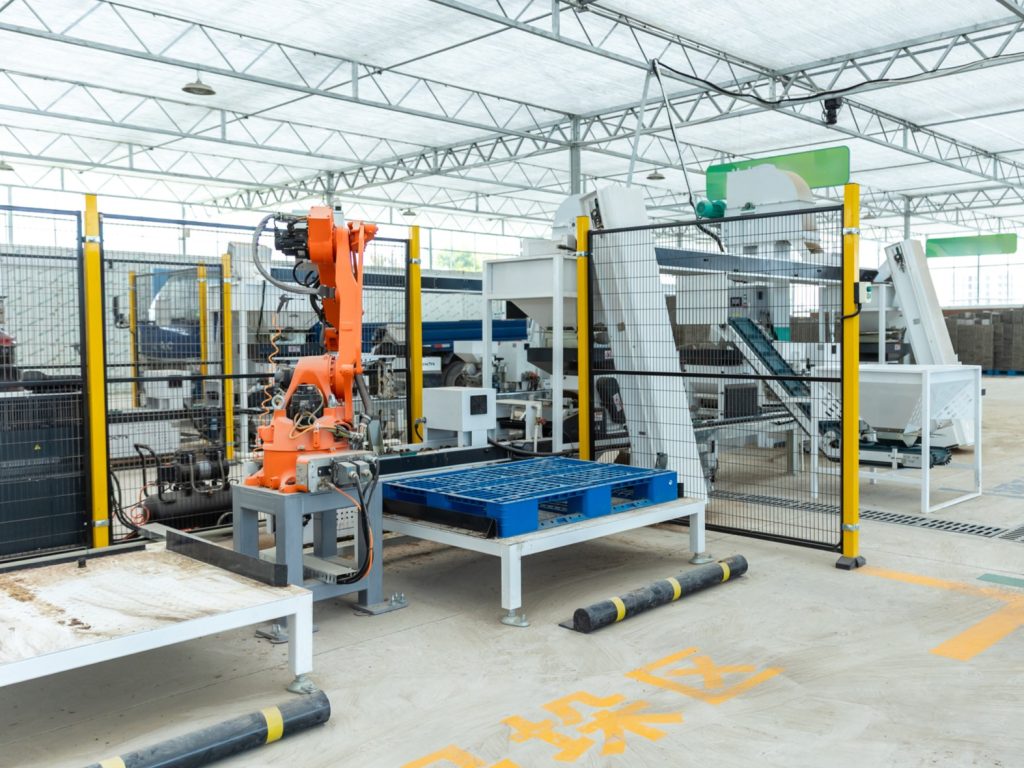
An industrial equipment manufacturer engaged Equinox Automation during the design phase of a new robotic welding cell.
Although the welding robot had not yet been installed, the project had already progressed into machine safety safeguarding design. Equinox was initially engaged to provide Machine Safety AS/NZS 4024 Compliance Support around the safeguarding concepts already developed.
During our initial review, it became clear the project had not yet sufficiently developed an AS/NZS 4024 Hazard Identification (Haz ID) and Machine Safety Risk Assessment to justify the proposed safeguards or demonstrate they represented the most appropriate risk reduction measures.
Rather than progressing directly into compliance verification, Equinox’s machine safety engineers worked collaboratively with the client and recommended returning to the Hazard Identification and Machine Risk Assessment stage.
This approach would provide a clear link between credible hazards and the proposed safeguarding, reducing project uncertainty, minimising potential rework and over-engineering, and helping ensure risks were reduced so far as reasonably practicable.
Challenge
An AS/NZS 4024 Machine Safety Risk Assessment are often completed as a consultant-led desktop assessment.
For relatively simple machinery, this can be a good approach. However, this welding robot project involved multi-station operating workflows, complex welding routines, safeguard muting, and interactions between operators and automated equipment.
The safeguarding design had already begun to evolve around assumed hazards and previously selected controls without a clear, traceable risk assessment to support those decisions.
Continuing directly into compliance review risked validating safeguarding measures without first confirming:
- Which hazards were genuinely credible.
- Which risks required further reduction.
- Which controls could be addressed through safer design or administrative measures.
Which hazards genuinely required control system safety functions.
Equinox engineers offered a different approach.
Solution
Equinox Automation planned and facilitated a multidisciplinary Hazard Identification and Machine Safety Risk Assessment workshop involving the client’s engineering, operations and health and safety representatives.
Drawing on our functional safety experience, our engineers adopted a structured workshop methodology similar to a LOPA workshop. This encouraged discussion, challenged assumptions and established consensus across the wider project team rather than relying solely on a desktop assessment.
Equinox facilitated the workshop using a custom AS/NZS 4024 and ISO 12100 compliant Hazard Identification and Risk Assessment worksheet. Hazards, operating modes, engineering controls, administrative controls and proposed safeguards were assessed live with the project team.
Each identified hazard was reviewed and either confirmed as credible or rejected based on the intended machine operation and foreseeable misuse.
Where further risk reduction was required, the team determined whether engineering or administrative controls were sufficient before assigning safety functions.
Where safety functions were justified, Performance Level targets were determined using the methodology of ISO 13849.
Outcome
The workshop established a clear and traceable engineering basis for the machine safeguarding design before detailed engineering proceeded.
Key outcomes included:
- A multidisciplinary workshop established consensus before detailed safeguarding design proceeded.
- Alignment between project management, engineering, operations and HSE before safeguarding decisions were finalised.
- Confirmation of credible hazards while eliminating assumed hazards that did not require further design effort.
- Identification of practical engineering and administrative controls that avoided unnecessary safety functions where simpler measures achieved the required risk reduction.
- Development of a justified list of required safety functions together with Performance Level targets for machine safety design.
- Delivery of a clear and detailed workshop report covering hazard identification, machine risk assessment and practical recommendations to support the design and safe operation over the life of the machine.
- Produced a clear basis for future machinery safety compliance and lifecycle activities.
By recommending the project return to Hazard Identification and Machine Risk Assessment before progressing with compliance verification, Equinox established a strong engineering basis for the safeguarding design.
Next Steps
Planning a machinery project or reviewing an existing safeguarding design?
For enquiries about machine safety risk assessments, safeguarding design or AS/NZS 4024 compliance.
Contact our team at Equinox Automation to discuss your project.
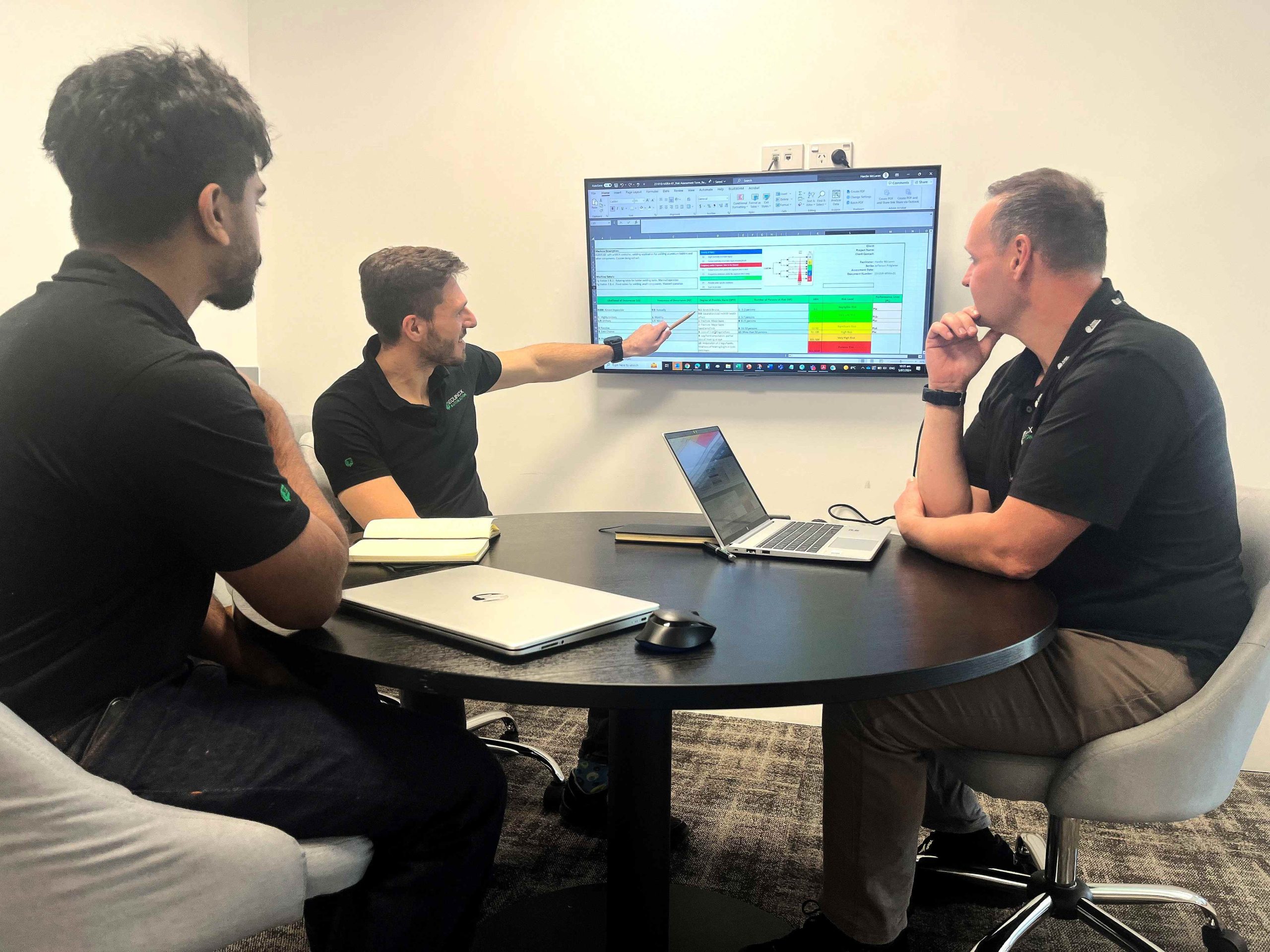
Machine safety risk assessment workshop facilitated by Equinox Automation.
Our engineers are TÜV Certified Machinery Safety Experts (CMSE®).